Publishing and Forking
Glow lets you publish workflows as reusable templates that anyone can fork and adapt. Publish one to the Marketplace and the wider Glow community can find it.
A workflow you created from a blank canvas can be published. A workflow forked from another template cannot be republished; start a new workflow if you intend to share an adapted version.
Publishing a workflow as a template
To publish a workflow as a template, use either the direct Marketplace route below or open the broader modal from Share → Deploy. Both publish a selected workflow version to the same Marketplace; the modal also exposes client deployment in an MSP workspace.
- Open the workflow you want to share.
- Open Workflow Settings and find the version section.
- Choose Publish to Marketplace.
- Fill in the details others will browse by: a title, a description of what it does and when to use it, who it is for, how it works, what setting it up takes, and what it needs. Generate descriptions drafts all of these from your canvas and suggests categories, so you edit rather than start from blank.
Once published, the template appears in the gallery for others to use.
Generate descriptions reads the canvas in front of you, including edits you have not saved, so a workflow you have just reshaped is described as it is now rather than as it was. It reads the steps, their names and how they connect — never the values you configured them with.
Changing the workflow afterwards does not update what you published. The same button now reads Publish new version. Press it when you want the marketplace copy to catch up with the workflow.
Tip: Read the generated description as somebody who has never seen the workflow. It knows what the steps are, not why you built them — the problem it solves and what the person running it needs to know are yours to add.
Forking a template
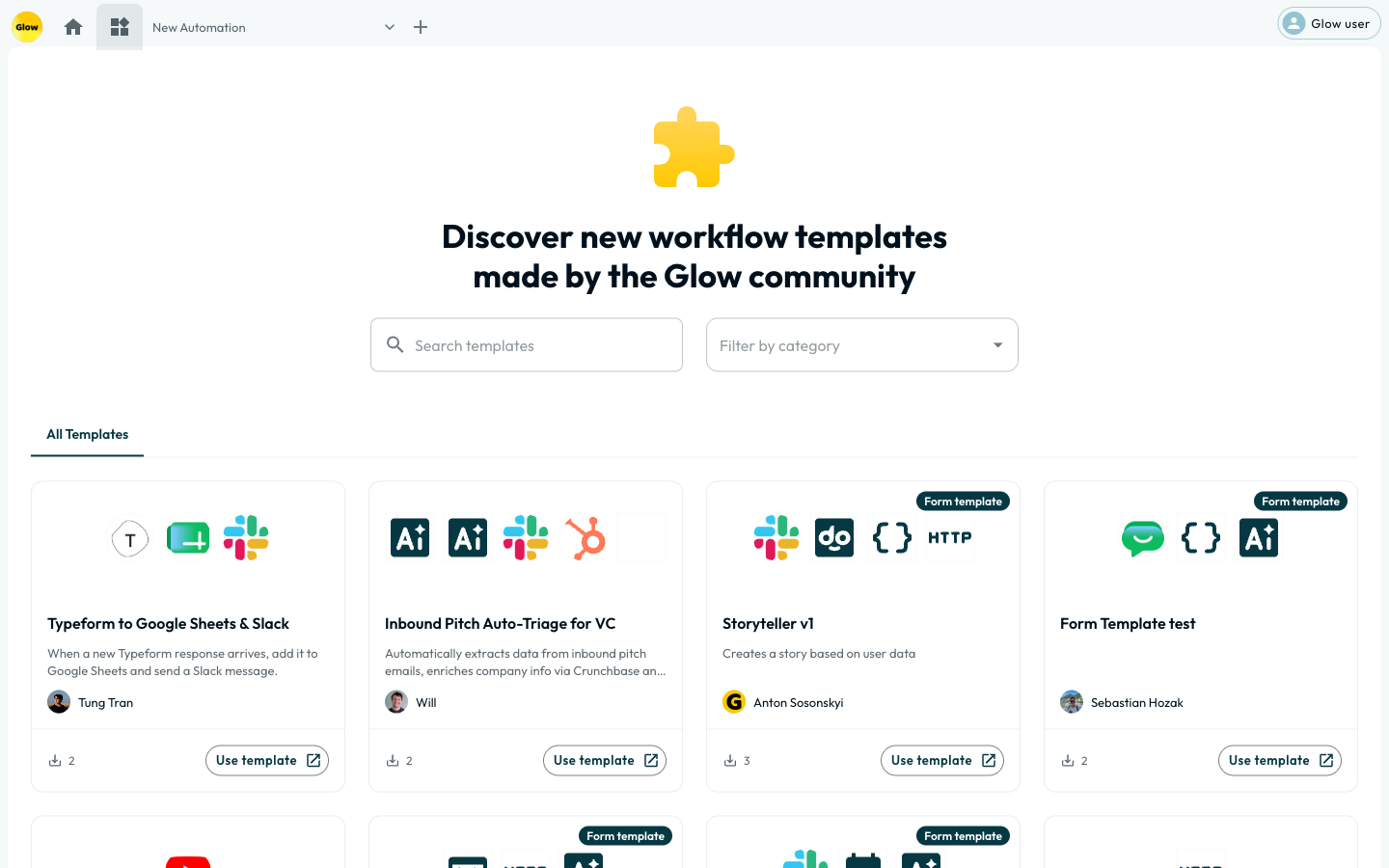
When you find a template you want to use:
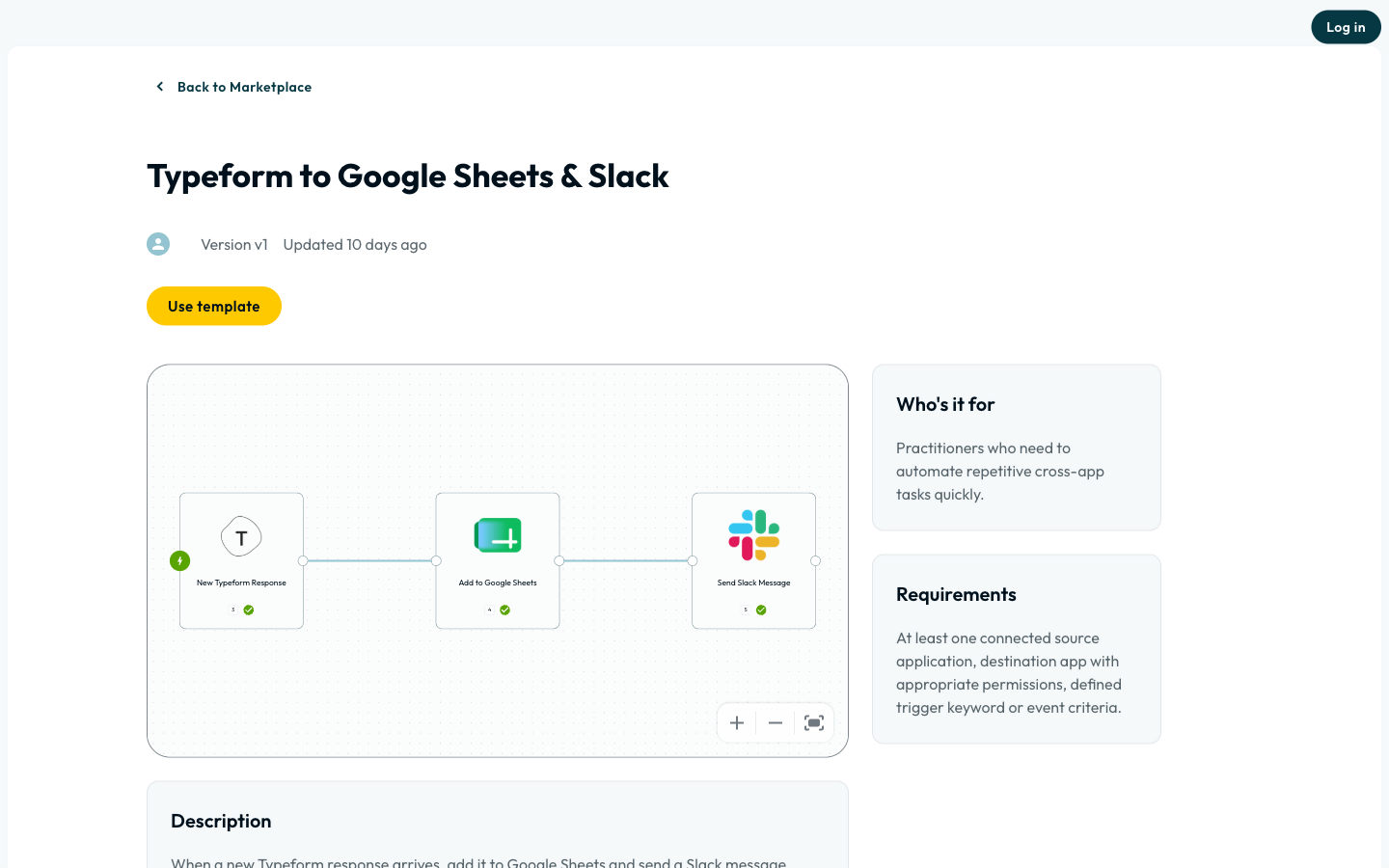
- Open the template detail page.
- Click Use template.
- Select the team where you want to create the new workflow.
- Glow creates a full copy of the workflow in your team. You can edit it freely, and your changes do not affect the original template.
Forking is non-destructive. The original template and your copy are completely independent after forking.
A workflow you forked from a template cannot itself be published as a template. If you want to share an adapted version, build it in a workflow that did not start as a fork.
When the original template is updated
If the template you forked from is published again with changes, your workflow shows a banner saying a new version is available. Show details compares the two so you can see what changed.
You apply the changes yourself: read the comparison and make the ones you want by hand. Your copy is never modified without you doing it, so a template that changes underneath you cannot break a workflow already running.
Creator profiles
Your name and picture appear on every template you publish, and each card links through to a creator page.
The name and picture on your account settings are what a reader sees attributed to your work, so those are the pair worth filling in.
Best practices for templates
- Keep templates self-contained. Avoid referencing team-specific secrets or files that a new user would not have. If your workflow needs credentials, document that clearly in the description.
- Use descriptive step names. When someone forks your template, clear naming helps them understand the workflow without needing to ask you.
- Version your templates. If you significantly update a workflow, consider publishing a new version of the template rather than overwriting the old one.
What’s Next?
- Keep the logic hidden and give end-users a simple interface with Form Templates.
- Track template revisions properly using Versioning.
- See everything you have published in one table on The Deployment Page.